The _____ Baby Squirrel Was Sad When Her Momma Squirrel Was Run Over by the Car.
Wild Squirrel

Photo courtesy of Coast & Canyon Wildlife Rehabilitation
Cute, isn't he? However, according to Coast & Canyon Wildlife Rehabilitation in Los Angeles, when infant ground squirrels feel threatened, they get into this defensive position. Look at this infant's nails. When this guy grows up, those nails will be tantamount to weapons as well as tools for the curious and energetic rodent.
Squirrels and other wild animals make lousy pets for numerous reasons. In many states it's illegal to keep them as pets, some states require licenses, and in other states people are required to have wildlife rehabilitator training. Some folks want to find a way around all this license nonsense, and while it's hard to hide a deer, cute fluffy squirrels can fit in a cage.
Not so fast.
Wildlife rehabilitator and veterinarian Terri Sutherland (not her real name because she gets too many rehabilitation requests) cares for two diseased male squirrels who are unable to care for themselves; releasing them would be a death sentence. Terri shares her personal top 10 reasons not to have a squirrel as a pet, entertaining as they are.
- The squirrel owns you. If you want to go away, you will need to find a house sitter with a lot of patience and a high pain tolerance. Even overnight outings require a house sitter.
- Sharp squirrel nails. Those nails, which are designed to pierce bark and allow them to climb trees, completely rake skin. The boys can merely walk across her and leave wounds. Landings leave sores. Terri has a "squirrel garb suit" she wears when the squirrels are roaming the house.
- Sharp squirrel teeth Part 1. They do not possess the bite inhibition reflex of domestic pets. If the first thing that crosses their brain is to bite, there is no counter message to say that is a bad plan.
- Sharp squirrel teeth Part 2. They also do not possess the chew inhibition reflex of domestic pets. If it looks tasty, it will be tasted. This includes wall paper, dry wall, furniture, and anything else you might have handy. (Dog owners may be used to this, but dogs can't jump nearly as far as squirrels.)
- Sharp squirrel teeth Part 3. Their teeth continue to grow throughout their lives. If you do not provide adequate chewing material to wear these teeth down, the squirrel is in for a serious illness. It is hard to do this for squirrels in a household setting.
- Squirrel diet. Squirrels require a balanced and natural diet that is time consuming, expensive, and difficult to provide. Hours are spent gathering food from the outdoors, cooking high-calcium diets, purchasing and preparing insects (big yuck factor for some mammal lovers). Much money must be spent on supplements and filling in the gaps.
- Squirrels are junk food addicts. They will beg, borrow, and plead for junk food, or if those plans fail they will just take it. Like children, what they like to eat is not what they need. People shouldn't let their children eat Twinkies® for dinner, and squirrels are no different.
- Squirrel energy. This is the entertaining part of living with a squirrel, but it is also the frustrating part. They need a lot of space: huge cages, and a lot of outside-the-cage time every day, about 2 to 3 hours per day, 7 days a week, 365 days a year. It is much like owning five young Labrador retrievers in a one-bedroom apartment.
- Squirrel messes. Squirrels like to keep their living areas clean and throw anything "dirty" onto the floor. This includes partially eaten bits of food, unliked food, wilted fruits and vegetables, nut shells, uneaten or partially eaten insects, and ‒ you guessed it ‒ OTHER wastes. Terri starts cleaning with a shop vac and says there are always insects crawling along the debris. If your inquiring mind wants to know, squirrels will hang on the side of their cages and aim the poop and pee onto the floor. They will poop as they run around the house (duh). They often sit down and eat their own poop. Squirrels only want their own area to be neat and clean. They don't care about yours.
- The biggest reason not to own a squirrel is that they are wild animals, and if we truly love them, they deserve to be free. Rarely, a medical issue will render a squirrel unreleasable, but healthy squirrels are not meant to be house pets.
Terri lives with two squirrels named Oly and Quinn. Oly was found in the middle of a busy highway, where he was apparently dropped by his mother while crossing the road. He has an endocrine disorder. Oly is a territorial male squirrel who thinks Terri is his mate and, with all the testosterone he can muster, Hates Her Husband With A Passion.
Terri found Quinn near the end of a canoe race when she was portaging (carrying the canoe over land) and found the cold, dehydrated, and abandoned baby. She knew the infant would be crushed by the people behind her and there was no nest around. Plus, she was winning the race. What else was she going do? Leave a baby there to die? Not bloody likely.
She slipped the lice-covered rodent into her life vest.
That's a Good Samaritan for you. Who else would throw lice and a cold poopy rodent down their shirt? She took him home and bottle fed him. He is diabetic, which is probably why his mother abandoned him. He eats a different diet than Oly. That increases the amount of time it takes her to prepare their meals.
The two rodents shred her house and skin, mangle her carpeting, stink up the place, and hoard her schedule.
Terri's opinion of squirrels as house pets is much like that of other wildlife rehabbers who care for squirrels.
Marcia Ryback of Coast & Canyon Wildlife, a certified wildlife rehabilitation organization in Los Angeles, has seen what happens when people try to keep squirrels as pets: they are not doing the squirrel any favors. Once a squirrel came in that had been kept in a small cage for two years and had not been well treated. Marcia was trying to "wild him up" so he could be released.
Bite Marks on Arm
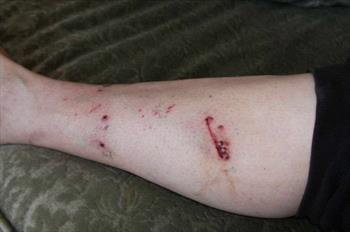
Photo courtesy of Coast & Canyon Wildlife Rehabilitation
"Because the squirrel didn't like people and was habituated, the squirrel attacked me by jumping through the trees, running down and attacking me very deliberately," Marcia said. "After I got him off of me, I was wondering how I would ever catch him again."
Marcia got a long pole net and went back outside. The squirrel came at her again and she was able to capture him, but it was a memorable experience for some scary reasons. The squirrel chomped on her leg and started working his way up her body.
"Luckily my long hair prevented him from getting to my head as he couldn't hold on."
If you're still thinking squirrels would make a fun pet, examine this photo of Marcia's leg and emphasize to yourself that that's the leg of someone who knows what she's doing with squirrels. No novice, our Marcia.
What you don't know about caring for a wild species could do far more harm than good to an animal.
If you find a wild creature in need of medical help, contact a local wildlife rehabilitator who will be knowledgeable about the wildlife and regulations in your area. Go to The Wildlife Rehabilitation Information Directory to find help and information.
If you love and respect wildlife, you know they deserve to remain wild.
Update 11/7/2016
Although we think it's a bad idea to keep squirrels or other wild animals as pets, we know that some people need to feed the babies before it's physically possible to get them to a wildlife rehabilitator, and that others will keep them as pets anyway. In the interest of keeping these babies as healthy as possible, we've asked the kind folks at the Wildlife Center of Virginia about the care and feeding of wee orphans.
Formula
As members of the rodent family, squirrels should be fed a specific animal milk replacement formula with the appropriate combined percentages of fat, protein, and carbohydrates found in squirrel milk. For eyes closed squirrels (under 4-5 weeks), an appropriate formula is Day One Fox Valley 32/40 formula for squirrels, opossums and rabbits. For eyes open squirrels (over 4 weeks of age), use Fox Valley 20/50 formula. Human baby formula nor cow's milk should never be used since the nutritional make-up is not appropriate for rodents. All prepared formula should be thrown out after 24 hours. Use clean containers each time you mix formula. Warm just enough formula for each feeding; food that is warmed repeatedly will lose nutrients and become contaminated with bacteria.
Always test the formula temperature with a thermometer before feeding. The temperature should remain warm throughout the feeding. Stir thoroughly to avoid any hot spots. Formula can easily overheat and burn the animal if you are not careful. Refrigerate unused portions immediately following each feeding because the formula will spoil if it is left out.
Hand-Feeding
While feeding the young animals, wrap them in a warm towel and hold them on their stomachs with their heads up (never on their backs or upright). This will help to prevent them from inhaling formula into the lungs. Using a 1-cc syringe, feed the animal very slowly and evenly so it does not inhale any formula. The syringe should be held firmly in the hand using a "hitchhiker" hand position (thumb on the plunger and all fingers wrapped around the plunger shaft and syringe barrel). The caregiver must be in control of the syringe plunger at all times. For very small mammals, the formula must be administered drop by drop. The maximum comfortable stomach capacity of most mammals is 5% - 7% of body weight, except rabbits, which is 10% - 12.5% of body weight, and should not be exceeded during each feeding.
Young mammals will not readily drink milk that has gotten cool, and cold formula can cause bloat. Test the temperature of the formula on the inside of your wrist and with a thermometer each time you refill the syringe and before you place it in the animal's mouth. To keep the formula warm during multiple feedings, try floating the container in a mug of warm water. Maintain the formula temperature at about 100⁰F. If using a meat thermometer, the temperature will read slightly higher.
Avoid changing diets or formulas abruptly as this can cause problems. Always feed a rehydrating formula followed by a diluted milk replacer formula for at least two to three feedings before offering a milk replacer formula. Follow the recommended feeding schedule for your animal's species, age and weight. When you cut out a feeding, space the other feedings out.
For example:
4 X DAY = 8 am, noon, 4:30 pm, 9 pm
3 X DAY = 8 am, 2 pm, 8 pm
2 X DAY = 8 am and 8 pm
1 X DAY = 8 am
Weaning (5-8 weeks old)
Weigh the animal and follow the feeding schedule for the appropriate size and age. It is extremely important not to overfeed. Hand feed using appropriate formula for age. In addition, add a mush bowl by mixing a small amount of formula with baby cereal and several pieces of soaked puppy chow in a shallow dish. Make it fairly thick. Be careful not to let the formula mush crust on their fur. If they become covered with the formula, clean the squirrels with a damp sponge or cloth, dry immediately with a cloth, being careful not to let them get chilled. Offer this dish of formula throughout the day and remove after the last hand feeding. Monitor animals carefully for signs of fur loss. Sneezing, clicking or other abnormal respiratory sounds can indicate formula aspiration. If this happens, discontinue bowl feeding for several days, supplement with hand feedings and consult your veterinarian for a treatment plan.
Between formula feedings begin to offer the squirrel small amounts of soaked puppy chow, dry puppy chow, paw-sized chunks of apple, sweet potato, broccoli, green beans, corn on the cob (1" slice), a couple of nuts without shells, etc. Add only 1 new food to the diet per day. If diarrhea occurs, immediately discontinue the new food. Watch for dehydration, and then try the new food again in 2 or 3 days.
Young mammals require a balanced and varied diet, which includes all essential vitamins and minerals, especially calcium. Base diets should consist of: rodent biscuits and puppy chow for squirrels. Fruits, nuts, seeds, corn and grains are to be given in small amounts as treats only. NEVER USE beef organs, beef bones, chicken organs, hamburger, lunchmeats, hot dogs, iceberg lettuce, cow's milk, onions, bread and honey.
Good calcium sources include: broccoli, cabbage, puppy/kitten chow, canned dog/cat food, appropriate milk replacer formulas, spinach, Timothy hay, hard boiled eggs, cooked chicken necks, green beans, carrots, mealworms, kale or mustard greens. Young animals that are fed foods that are deficient in calcium or have skewed calcium to phosphorus ratio (more phosphorus than calcium) can develop nutritional problems within a few days. If not corrected immediately, severe non-reversible symptoms may arise including bowed legs, fractures, rubber jaw, spinal deformity, and hind leg paralysis, leading to the animal's ultimate death. Many of the listed signs could be clinical signs of metabolic bone disease (MBD). Proper nutrition is essential to the healthy survival of an animal.
Gradually increase the amount of solid foods as you decrease the amount of formula given. Make sure the squirrels eat all foods presented and do not eat only their "favorite" food. For example, a small piece of apple per day is fine but a squirrel may choose apples to the exclusion of everything else if given the chance. Limit foods listed as treats. Try to offer foods that the squirrel may find in the wild such as acorns or maple tree twigs and buds. While it is improbable that they will find "wild broccoli", it is a good substitute for wild greens.
You may need to supplement with hand feeding one or more times daily if they are slow to wean. Make sure each animal is getting all the nutrition needed, as each animal is unique. Weigh each animal every 2-3 days to make sure that they are getting enough to eat. When animals are learning to eat solid foods it is difficult to tell if their nutritional needs are being met and weighing is a good guide. A small weight loss is acceptable during weaning as long as a downward trend is not noticed.
Once the teeth are well formed, add two to three native nuts per day. Too many seeds and nuts could lead to hypocalcemia (inadequate amount of calcium in diet), resulting in serious health problems and even death for the squirrel. You can help the squirrel crack its nuts when it is 5-7 weeks old. However, they need to learn to crack nuts themselves before they can be released, so don't open nuts for them after 8 weeks of age. Squirrels seem to always choose the "tasty" foods first. Be sure to add early on in their diet a few rodent blocks (rodent chow), which is nutritionally complete.
With thanks to the Wildlife Center of Virginia
132 Comments
Shylaja Prem
May 5, 2021
Rick
December 21, 2020
Kat
November 28, 2020
Lori, adopt a mom for Fred and Ginger
May 23, 2020
Maple the Squirrel
May 14, 2020
Thomasina
April 28, 2020
Kenneth Hine
April 16, 2020
Lucy Mee
April 2, 2020
Andy Brown
February 24, 2020
Mike
January 12, 2020
Deryk Lakatos
November 26, 2019
Phyllis DeGioia
November 4, 2019
Cynthia Farmier
November 4, 2019
Denise
October 27, 2019
Meg
October 27, 2019
Shan
October 15, 2019
Dr. Nathan Mueller
September 11, 2019
Ginger Vitus
September 8, 2019
Divakar
August 28, 2019
Ryan Keith Worsham
July 21, 2019
Shannon
July 8, 2019
Ginger
March 11, 2019
Laura
January 28, 2019
Phyllis DeGioia
January 21, 2019
Ray Walker
January 20, 2019
Gillain
November 30, 2018
Phyllis DeGioia
November 21, 2018
URQ
November 20, 2018
Bill
November 14, 2018
Ken
October 24, 2018
Phyllis DeGioia
September 26, 2018
Nutz's Momma
September 25, 2018
Phyllis DeGioia
May 15, 2018
Mlb
May 13, 2018
Sigrid Warren, licensed wildlife rehabilitator
February 5, 2018
Nancy Shappit
January 24, 2018
Phyllis DeGioia
January 3, 2018
Nicole
January 3, 2018
Joe
December 22, 2017
Squirrel lover
November 29, 2017
Beth
November 18, 2017
Nikki
October 20, 2017
Tina
September 27, 2017
T Grady
July 23, 2017
Phyllis DeGioia
June19, 2017
Tim OBrien
June 18, 2017
Phyllis DeGioia
June 12, 2017
Ray Dyck
June 12, 2017
jay
May 7, 2017
miranda
April 28, 2017
Dave L
December 31, 2016
Ginny
December 6, 2016
Max
November 24, 2016
Katryna
November 14, 2016
Dr. Ned Gentz
November 1, 2016
Kayla
October 31, 2016
Malachai
October 12, 2016
Haley MP
October 9, 2016
Matt
October 5, 2016
Michael
October 5, 2016
Sunbury Buckeye
September 26, 2016
Phyllis DeGioia
September 20, 2016
Sanjay
September 20, 2016
Charlotte Simko
September 10, 2016
Gael Gomez
August 22, 2016
Joe
August 12, 2016
Jesse
July 20, 2016
GameSquirrel
May 11, 2016
Aaron
May 1, 2016
Nichole
April 19, 2016
Phyllis DeGioia
February 11, 2016
khend
February 10, 2016
Matthew Smith
January 26, 2016
Brandi
December 12, 2015
Kris
December 7, 2015
Jimmy Davis
December 7, 2015
Squirrellord
December 5, 2015
Christy
November 23, 2015
Athul
October 21, 2015
Brant
October 17, 2015
Brian Surrey
September 28, 2015
Michael Whitely
September 26, 2015
Walt
September 25, 2015
Chris Woodcock
September 12, 2015
Phyllis DeGioia
September 2, 2015
Abiral Regmi
August 26, 2015
Lucy
August 26, 2015
Becki
August 21, 2015
Annie
July 28, 2015
Scott Kimble
July 6, 2015
Phyllis DeGioia
May 26, 2015
Sis Baker
May 25, 2015
Tessa
May 24, 2015
Phyllis DeGioia
May 11, 2015
Chris Rowe
May 11, 2015
Phyllis DeGioia
May 7, 2015
Dominique
May 7, 2015
Brad
April 2, 2015
Joanne
March 27, 2015
Shirley Bean
March 20, 2015
Phyllis DeGioia
February 20, 2015
Lina
February 19, 2015
Shirley
February 13, 2015
Jack
January 11, 2015
Phyllis DeGioia
December 10, 2014
Mike
December 9, 2014
Joe Bogan
November 23, 2014
Whitney
November 10, 2014
Sandy
November 9, 2014
LadyV
October 10, 2014
JoAnne Brown
September 30, 2014
squid
September 27, 2014
Carla Kelly
August 12, 2014
Geary
August 4, 2014
Brandon
May 11, 2014
Mitch
May 3, 2014
Toniworld
April 21, 2014
Tim
April 16, 2014
Christy Corp-Minamiji, DVM
March 3, 2014
Donna
February 26, 2014
Tom
November 27, 2013
Derek
November 21, 2013
Janet
August 2, 2013
Lekky
June 26, 2013
Nicole
October 25, 2012
Holly
July 26, 2012
TAM
July 21, 2012
aljuhara
July 17, 2012
Shirley Yuen
July 17, 2012
Jean T.
July 17, 2012
Joyce Marshall-Lipka
July 17, 2012
Ned Gentz
July 13, 2012
The _____ Baby Squirrel Was Sad When Her Momma Squirrel Was Run Over by the Car.
Source: https://www.vin.com/apputil/project/defaultadv1.aspx?id=5454945
0 Response to "The _____ Baby Squirrel Was Sad When Her Momma Squirrel Was Run Over by the Car."
Post a Comment